• Home
  • About Us
  • Research
  • Links
  • Contact

Payback: When the Debt Collector Calls

Thursday, June 24th, 2010

We live in interesting times. Interesting in that we are slowly realising that we have spent way beyond our budget: in monetary terms of course but also ecological. We are consuming ecological resources at an increasingly rapid rate (see Al Bartlett’s fabulous work on Arithmetic, Population and Energy) and using ecosystem services well in advance of their ability to provide.

But it’s useful to sit back and consider the element of contract here. When we borrow we commit to a contract that is so ancient so as to be part of our very soul. From Faustus to Scrooge, the spiritual nature of this bargain is ever present. I must mention here the fabulous work by Margaret Attwood titled “Payback: Debt and the Shadow Side of Wealth“. It reminds me somewhat of Arundhati Roy’s venture into non-fiction in “The Cost of Living“. I like brilliant writers who veer off into interesting worldly issues and Attwood’s book has certainly inspired this post and much thought on the nature of debt itself.

It’s not the type of book I would expect from an author of fiction but it’s really a masterpiece on the understanding of debt and our long relationship with it. When we look at debt and debt slavery we realise it has been around since the beginning of time. The ability to hock one’s wife and child into servitude is not a recent phenomenon. The Faustian bargain is long known even if these days it’s for a consumer good (take your pick) on a 5 year no interest deal: no interest? do people actually believe that? Yes they do.

The focus is always on the weekly amount…..’oh that’s $15 a week. yes i can fit that into my budget”….shame it’s $15 a week forever!! and that television or sofa has cost you double, treble of even more than the advertised price…..oh and it’s worth sod all to sell.

Anyone remember Polonius? The father of Ophelia and general rambling windbag in the Kingdom of Denmark (That’s Hamlet for you who didn’t have the joys of Shakespeare at school).

“Neither a borrower nor a lender be”.

Famous words reprised many years later by Keynes at Bretton Woods when he proposed that countries should keep their trade accounts balanced as much as possible…..that applied to those in credit as well a debit.

And look where we are now……we’re at Payback time. But where is Mephistopheles? Who is going to do the collecting? To pay or not to pay? That is the question said Hamlet…perhaps.

The imbalances in the system are so great that there is no amount of money available to repay the debts. Perhaps they should all be written off as a bad idea and we should start again from scratch….but hark I hear Shylock coming…is there a pound of flesh available? Land…not transportable…but commodities from the land…maybe.

At some point the contract must be addressed; At some point a bargain must be made; At some point there will be the mother of all restructuring. Who will pay…now that really is the question.
Tags: balanced trade, banking, bartlett, bretton woods, contract, debt, dickens, ecosystem, faustus, hamlet, interest, keynes, margaret attwood, money, payback, polonius, scrooge, Shakespeare, usury | No Comments »

The People vs The Banks

Monday, November 5th, 2007

News comes of a huge class action suit brought in Canada by a litigator called John Dempsey. Following on from John Kutyn’s (a Canadian living in NZ) paper “the Nature of Money” it takes the next step of actually calling banks to account under the law.

It’s being held up in the courts but at some point the suit must be acknowledged and heard. Its a tough one for the judges as they are being asked to rule on one of the most accepted practices in society today, namely the equivalence of “digital money” and cash in the form of notes and coins.

With the relentless advance of Peer to Peer lending systems coming online and complimentary currencies in every country it is easy to see how a major change is underway. Sure the banks may not be too concerned now but we are seeing the beginnings of a major revolution in what we know as money.

Tags: banking, central banks, credit, debt, interest, interest free banking, microfinance, money, money reform, p2p, usury | No Comments »

The Nature of Money

Sunday, June 10th, 2007

In a previous post Does Money Grow on Trees? i looked at how money comes into existence but in a broad sense of the word.

In his paper, The Nature of Money, John Kutyn examines in detail what money is starting from the late 16th century. He explores the development of what we know as bank notes from their early days as accommodation bills and the establishment of the Bank of England as a way of funding a war against France.

 He follows the development of money and banking primarily through the legal process andlooks at numerous cases in law of challenges to the meaning of money and the transactions it is used for.

He challenges the banking system to show that it is not acting fraudulently in law when it uses deposits as money and actually creates money via new loans. Of course only a Reserve Bank can create money or so the law states. So is true? Well i suggest you read his paper and draw your own conclusions but he makes a compelling case.

Not content with that he then moves on to looking at the economic impacts of the current system which has a built in imperative for growth resulting in continued boom bust cycles. He argues that this is down to the interest burden and that debt free money is the only way a stable economy can be achieved.

 As we approach yet another global bust and possible depression it is worth relfecting on the themes in this paper.

Tags: bank of england, banking, central banks, debt, economics, federal reserve, inflation, interest, interest free banking, law, money, money reform, money supply, new zealand, politics, reserve bank of new zealand, usury | 2 Comments »

Money doesn’t grow on trees or so they say

Thursday, May 31st, 2007

They also say that money makes the world go round…well metaphorically it does. It oils the wheels of commerce and enables us to transact with each other and exchange our goods and services.

But how does money actually grow? There always seems to be more of it around. Who creates it?

You probably assume your local central bank does because only they can print notes and coins. That much is true but that’s only a bit of the story. Currently only 2-3% of the total money supply is created in the form of notes and coins that we keep in our wallets and purses.

The rest? Well as JK Galbriath noted the way in which most money is created is “so simple that the mind is repelled”. The private banking system simply create the balance of new money by issuing new loans.

That’s it. For those of you who thought banks lent out money you have deposited with them i’m sorry to inform you that this is not the case.

If you deposit $1000 in the bank, they now have the ability to lend out (and in the process create new money) up to $10000. Of course they charge interest on that loan which is where they make their huge profits from.

I’ll give you an example:

In New Zealand the money supply has increased 101% in the last 8 years. So the total money stock has more than doubled in 8 years!! In that time house prices have risen 143%.

But the official measure of inflation has only risen 20%. Hello…..what is going on here? Yes it is a complete mess.

It is not the central bank or government printing money and causing huge (but unmeasured inflation). It’s the private banks who are doing it! The ones who scream and shout if governments ever think about reclaiming their right to issue money interest free on behalf of their citizens.

It is one of the greatest swindles of in history.

It requires that people sit up, take notice and look hard at what is happening around them. In the US especially the system is starting to creak…..look at the housing market and the lenders that operate in it.

Please see the following sites for more information. Once you learn about this life will never be the same

US: www.monetary.org

UK: www.monetaryreformparty.org.uk

Can: www.comer.org

Aus: www.peoplesbankparty.org

As my old history teacher said read, learn and inwardly digest.

Tags: bank of england, banking, central banks, debt, economics, federal reserve, housing, inflation, interest, interest free banking, money, money reform, mortgage, new zealand, parliment, policy ideas, politics, reserve bank of new zealand, sustainability, usury | 1 Comment »

  •  

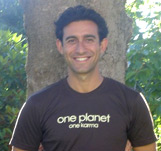
    I’m a Londoner who moved to Christchurch, New Zealand in 2002. After studying economics and finance at Manchester University and a couple of years of backpacking I ended up working in the financial markets in London. I traded the global financial markets on behalf of investment banks for 11 years. In 1998 I decided to explore the underlying financial system in more detail and its impact on society. The results were startling! In 2000 I decided to leave banking and explore new opportunities. I helped start up Trucost, an environmental research company, exploring ways of placing a value on ecosystem services. In 2002 I moved with my family to Christchurch, New Zealand. Since then I have returned to University studying political science and helped start up another company, VortexDNA, which explores the science of human intention and its predictive abilities. I am an active Angel investor, mainly in clean tech and web 2.0, and also volunteer for local community organisations in the areas of finance and mentoring. I am always keen to make new connections and hear about new ideas. Contact me directly on raf AT sustento.org.nz

    Follow me on Twitter

    Tag Cloud

    amnesty banking bank of england central banks china climate change credit credit crunch currencies debt economics ecosystem environment externalities federal reserve financial crisis food forex fossil fuels freedom future global warming greenhouse gas emissions human rights inflation interest intervention investing markets microfinance money money reform money supply mortgage new zealand oil p2p policy ideas politics repression reserve bank of new zealand sustainability systems un declaration of human rights violence
  • Recent Comments:

    • Raf: Paul, Thanks for that. I have just added in the news of another asset manager being investigated by the SEC for...
    • Paul Williams: Raf, thanks for this summary. There’s a very good interview with Lewis on BBC4’s the...
    • Hubberts Peak: I believe that peak oil is accurate and that we are now past the point of peak oil. I understand many...
    • Dai: Solid, no nonsense observations. All of us living in Hobbitland most certainly hope that our houses don’t...
    • Joyce Sabel: interesting take on the subject, count me as a new subscriber!
  •  

    Subscribe to the RSS Feed
    Enter your email address:

  • Archives

    • June 2010
    • March 2010
    • January 2010
    • September 2009
    • August 2009
    • July 2009
    • June 2009
    • May 2009
    • April 2009
    • January 2009
    • December 2008
    • November 2008
    • October 2008
    • September 2008
    • August 2008
    • July 2008
    • June 2008
    • May 2008
    • April 2008
    • March 2008
    • February 2008
    • January 2008
    • December 2007
    • November 2007
    • October 2007
    • September 2007
    • August 2007
    • July 2007
    • June 2007
    • May 2007

Home | About Us | Research | Links | Contact

© 2007 Sustento Instuitute