• Home
  • About Us
  • Research
  • Links
  • Contact
  • Events

Intentional Money: Give, Lend or Buy

Sunday, June 28th, 2009

According to my colleague and friend, Branton Kenton-Dau , human beings are intentional devices. We are here for a purpose, a reason and our human form is a structure for expressing intention. I like that. Every time we act we are expressing something about ourselves even in the most nano way.

So when it comes to managing our money we are faced with the same questions: who am I and what is my intention?

It seems to me that we have 3 ways of using our money: Giving, Lending or Buying.

Giving is the simple act of directing one’s money to somone else with no expectation of financial return inclduing the original gift. But there is a clear intention that the gift should have some kind of impact. Simply this can be regarded as giving money to charity or a fundraising appeal. Your return is hopeful, that some positive outcome or impact will be achieved by way of your contribution. This is a powerful way of expressing your intention. Of course one can also give your time, goods and services for no financial return and this is a more hands on approach.

Lending, otherwise known as saving, is also a powerful tool. When you deposit your cash in the bank you are in effect lending to the bank. In legal terms you are an unsecured creditor of the bank. There is little intention here as we tend to see the process as the bank doing us a favour. But when it comes to peer to peer lending, microfinance or simply lending money directly to friends, the process takes on a deeper signifiance. There is a more direct energy involved and a desire to participate in an outcome. The personal connection to borrowers helps create this possibility. Another form of lending is to large business via corporate bonds. This is akin to saving in the bank except again there is a directness involved. A large business wants to raise $100m and I lend it $20,000. I’m a small piece of that but I’m essentialy helping to fund the business. But there is still some distance there as I’ve probably dealt through a boker or investment advisor. What I am keen to see is more peer to small business in developed countries. We’ve seen Kiva open up loans into the US now and soom we will see more acceptance in people lending larger sums to small businesses. Not so much microfinance as peer finance. What better way to create strong and trusted communities than people lending to businesses they buy from.

The third form of intentional money is the process of buying. This is two parts: buying for ownership in a business and buying for personal consumption. The latter is the world of ethical and values based purchasing. It’s a well developed market and I won’t got into that. But actually directing your money into businesses through ownership is another way to direct the flow of your financial intention. Whether it’s ethical investing at the macro level (buying into ethical funds) or at the micro level (investing in start ups that share your goals and values). The micro level is more interesting because the impact of your investment is greater. In the macro world of stock markets and large companies your investment is not so influential because of the way institutional investors control so much of the market.

We have many choices when it comes to dealing with our money. Each time we make a financial decision we have an opportunity to express our intention. Its a very powerful force. The more we align our choices with who we are, the more powerful our impact becomes. We become an efficient intentional system

As they say money talks.
Tags: borrowing, buying, ethics, finance, giving, intention, investing, lending, microfinance, money, peer to peer, systems, values, wholeness | 1 Comment »

Chicken Licken: The Market Speaks

Thursday, February 28th, 2008

Back in January the Indy ran a story on the life and times of battery farmed chickens. As you might expect it didn’t make pleasant reading.

Now following the campaign against battery chickens The Independent reports an complete sell out of free range chickens in the UK.

Figures suggest that in 2007 the sale of battery farmed chickens fell by alomst 10 million birds whilst consumers bought 4.4 million more free range.

This is the consumer voting with their wallets and this is how it should be: a change in individual consciousness.

It’s also interesting the overall sales fell by nearly 5% suggesting that some consumers turned away from chicken altogether.  Again this is an outcome of raised awareness.

It just demonstrates what can be done when the consumer shifts.  

Tags: chicken, ethics, externalities, farming, food, markets, organic | No Comments »

Ethical Foreign Policy: Get Realpolitik

Saturday, November 3rd, 2007

The recent visit of the Saudi Arabian King Abudullah has caused no end of consternation amongst activists of all hue. Let’s face it the Kingdom is not exactly progressive when it comes to human rights or gender equality.

The famous “ethical foreign policy” of the Blair years, a deception like most other announcements of that time, is clearly is misnomer. The real question is can there ever be ethics in foreign policy?

Foreign policy is all about making sure ones national interest is enhanced, or at least not set back, by international events. As Mick Hume notes realpolitik is still the name of the game. Yes we will be enraged at hideous regimes but we have to consider our trade interests blah blah blah.

New Zealand tends to take the higher moral ground where possible but of course people would argue NZ is too small for anyone to notice. The stance of our neighbours across the ditch is somewhat different and maybe its because they have more to worry about with Indonesia to the North and as a bigger economy they interact more competitively with other interests in the region.

It’s an interesting dilemma. The Great Game continues and its hard to see when its going to stop. Until then expect ethics and morals to be trotted out only around election time.

Tags: activism, amnesty, australia, democracy, ethics, foreign policy, freedom, new zealand, united kingdom | No Comments »

  •  

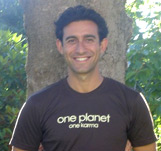
    I’m a Londoner who moved to Christchurch, New Zealand in 2002. After studying economics and finance at Manchester University and a couple of years of backpacking, I ended up working in the financial markets in London. I traded the global financial markets on behalf of investment banks for 11 years. I write about the intersection of economic, social and environmental issues . My prime interest is in designing better systems to create a better world. I welcome comments and input.

    Follow me on Twitter

    Tag Cloud

    amnesty banking bank of england central banks china climate change credit credit crunch currencies debt economics ecosystem environment externalities federal reserve financial crisis food forex fossil fuels freedom future global warming greenhouse gas emissions human rights inflation interest intervention investing markets microfinance money money reform money supply mortgage new zealand oil p2p policy ideas politics repression reserve bank of new zealand sustainability systems un declaration of human rights violence
  • Recent Comments:

    • Dave Kennedy: Yes, I can see a combination of the two would be very effective. I agree with you that the money...
    • Raf Manji: Dave, Sure. Carbon emissions (and others for that matter) can be dealt with in a different framework. A...
    • Dave Kennedy: Environmental contingency bonds may indeed deal with an accident or unintended environmental disaster...
    • maria morris: I love the disruptive idea of starting from scratch. I believe a key to Jaime Lerner’s impact is...
    • Dai: Bringing back home the Cullen Fund is a great no-brainer that seriously needs to get some air time.
  •  

    Subscribe to the RSS Feed
    Enter your email address:

  • Archives

    • April 2012
    • March 2012
    • December 2011
    • October 2011
    • September 2011
    • August 2011
    • May 2011
    • April 2011
    • March 2011
    • February 2011
    • January 2011
    • October 2010
    • September 2010
    • June 2010
    • March 2010
    • January 2010
    • September 2009
    • August 2009
    • July 2009
    • June 2009
    • May 2009
    • April 2009
    • January 2009
    • December 2008
    • November 2008
    • October 2008
    • September 2008
    • August 2008
    • July 2008
    • June 2008
    • May 2008
    • April 2008
    • March 2008
    • February 2008
    • January 2008
    • December 2007
    • November 2007
    • October 2007
    • September 2007
    • August 2007
    • July 2007
    • June 2007
    • May 2007

Home | About Us | Research | Links | Contact

© 2007 Sustento Instuitute